
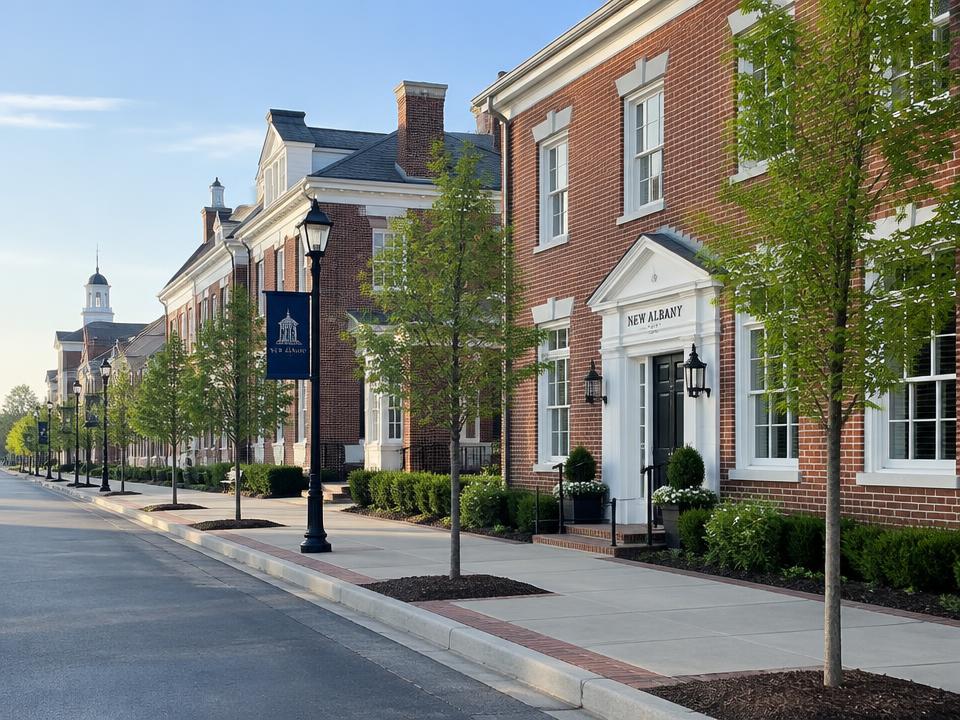
New Builds
Olivia Griffin
Building or buying new, step by step
Buying a newly built home has its own rhythm, costs and paperwork. Here is a practical overview of what to compare, what to ask and what to expect from the first model-home visit through the warranty period. Every builder is different, so confirm specifics with the builder, your lender or the appropriate professional.
Compare more than the model home
A new home is really four decisions at once: the builder, the community, the location and the floorplan. It helps to weigh each one on its own before you fall for a finished model.
- Builder — how long they have built in the area, what their warranty covers and how they handle service requests after closing.
- Community — HOA rules and fees, what amenities are finished versus planned, and how much of the neighborhood is still to be built.
- Location — commute, school district, nearby development and what may be built on surrounding land.
- Floorplan and lot — orientation, yard size, slope and drainage, and which features are standard on this plan rather than shown as upgrades.
Base price versus all-in cost
The advertised base price is a starting point. The number that matters is what the finished home costs you, so ask for an itemized estimate as early as possible.
- Lot premiums for corner, wooded, cul-de-sac or larger lots.
- Structural options and design-center upgrades, which can add up quickly.
- Allowances — the budget included for items like flooring or lighting, and what happens if your selections exceed it.
- Site costs such as grading, driveways, landscaping, fencing or window treatments that may not be included.
- HOA dues and any initial or transfer fees.
- Property tax estimates: taxes on a new home may be based on land value until the home is assessed, so ask the county auditor or your lender how the estimate was calculated.
Visiting model homes and registration
Many builders ask visitors to register on their first visit, and some policies only recognize a buyer’s agent who is present or named at that first visit. Policies vary by builder, so if you would like your own agent to represent you, reach out before you tour or register, and confirm the builder’s policy in writing.
Remember that the on-site sales team represents the builder. Model homes are usually furnished with upgrades, so ask which finishes are standard.
Contracts, deposits and incentives
Builder purchase agreements are typically written by the builder and can differ significantly from a standard resale contract. Read them closely, and consider having a real estate attorney review the terms before you sign.
- Deposits — how much is due and when, and whether any portion is refundable if financing or other conditions fall through.
- Change orders — deadlines for selections, how changes are priced, and whether they require additional deposits.
- Completion dates — how estimated dates are set and what the contract says if construction runs late.
- Financing incentives — some incentives depend on using the builder’s preferred lender or title company. Compare written Loan Estimates from more than one lender to see what the incentive is actually worth.
- Dispute terms — whether the contract or warranty requires mediation or arbitration.
Build stages and timelines
A to-be-built home generally moves through permits and site preparation, foundation, framing, mechanical rough-ins, insulation and drywall, interior finishes, and final inspections before closing. Timelines vary by builder, season and home.
Weather, material availability, labor and permitting can all cause delays, so plan housing, rate locks and moving dates with some flexibility, and ask your lender how a longer build affects your financing.
Independent inspections
Municipal inspections check code requirements; they are not a full review of workmanship. Many buyers hire their own licensed home inspector at two points where the builder permits it: before drywall, while framing, wiring and plumbing are still visible, and again before the final walkthrough.
Ask the builder early about access, scheduling and any rules for outside inspectors, and get those terms in writing.
Walkthrough, punch list and warranty
Before closing, the builder typically holds a walkthrough to review the home and list unfinished or incorrect items — the punch list. Note everything in writing and confirm how and when each item will be completed.
Builder warranties often cover different components for different lengths of time. Keep a copy of your warranty, learn how to submit requests, and track any scheduled check-ins, such as a review near the end of the first year.
Questions to ask the builder
- What is included in the base price, and what is shown as an upgrade in the model?
- What lot premium applies to the lot I’m considering?
- What are the allowances, and how are overages priced?
- How much is the deposit, when is it due, and when is it refundable?
- What are the deadlines and costs for change orders?
- What is the estimated completion date, and what happens if it changes?
- Is there an incentive tied to a preferred lender or title company?
- What are the HOA fees and rules, and what is still planned for the community?
- May I bring my own inspector before drywall and before the final walkthrough?
- What does the warranty cover, for how long, and how are service requests handled?
- What is your policy for working with my own agent?
Helpful consumer resources
- Warranties for New Homes — Federal Trade Commission
- Buying a House: Tools and Resources — Consumer Financial Protection Bureau
- Buying a Home — U.S. Department of Housing and Urban Development

Olivia Griffin
REALTOR® · Haven Home Realty
Ohio license #2020006931